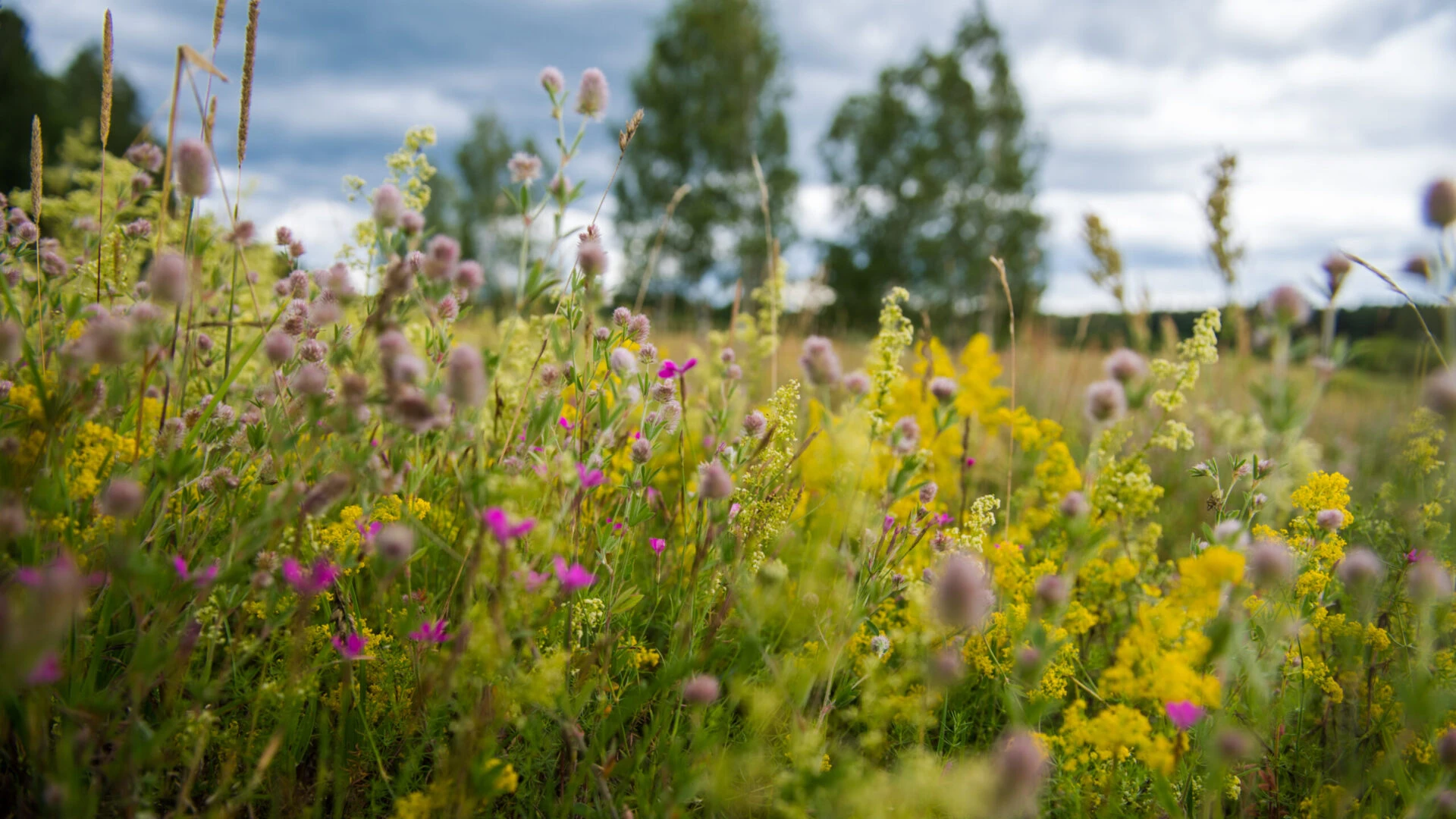
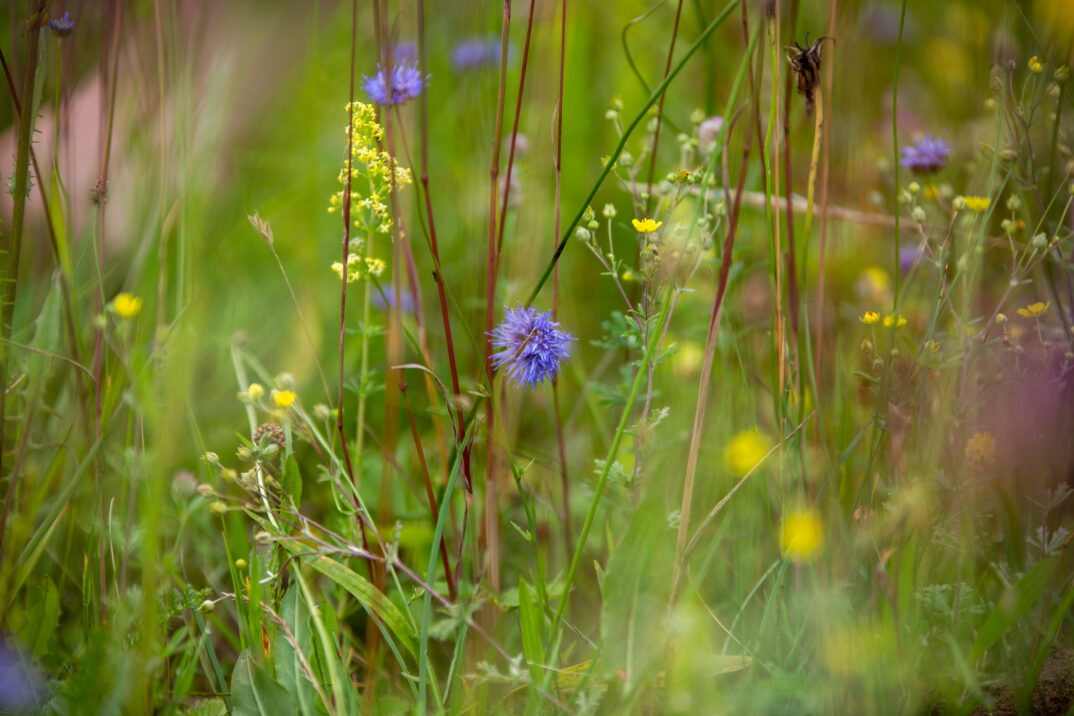
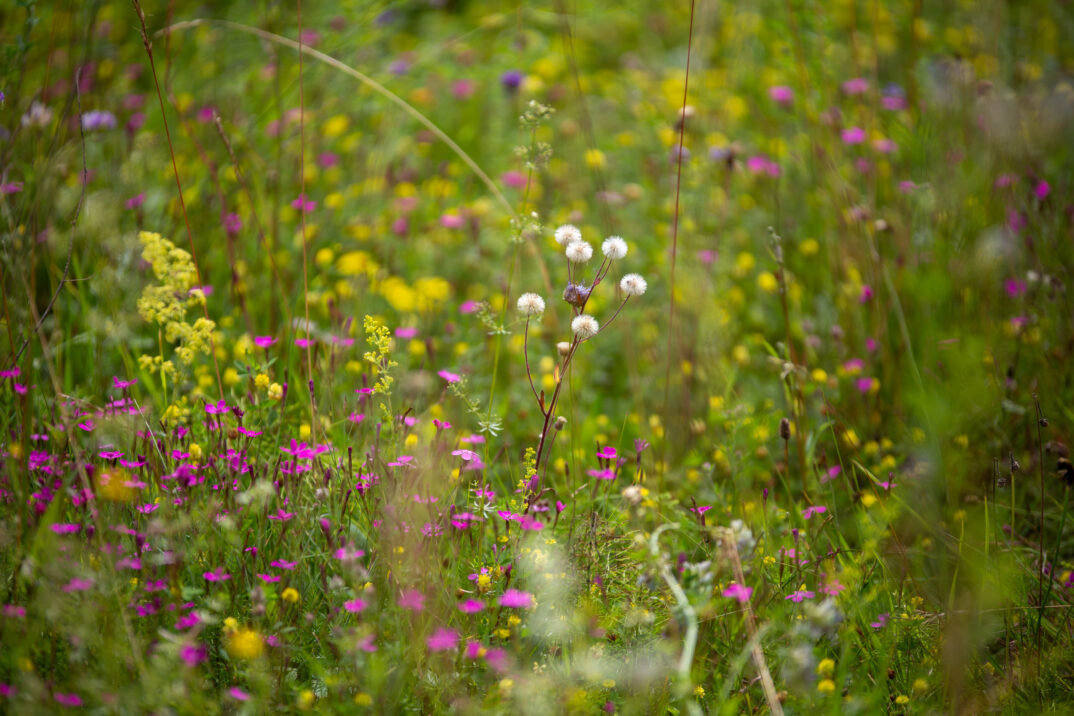
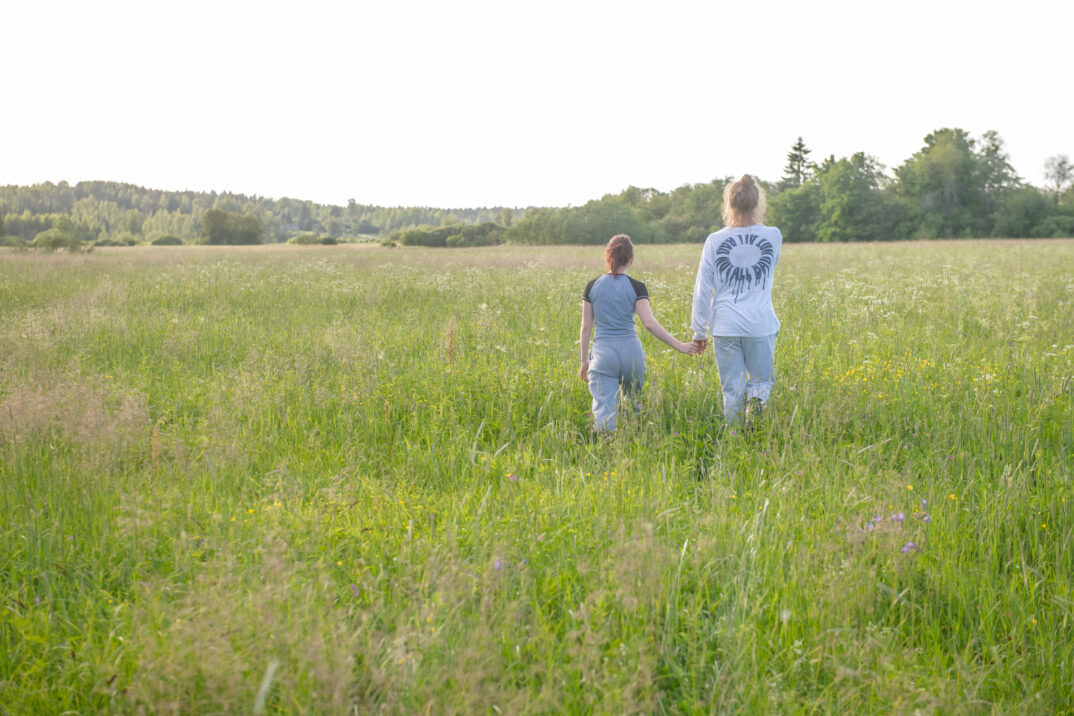
A natural grassland has developed through long-term grazing and mowing and has not been ploughed or improved with fertilisers. This traditional management has created exceptionally high plant species diversity by providing suitable conditions for their development – reduced soil fertility, seed dispersal, and a variety of ecological niches.
Semi-natural grasslands are the most species-rich ecosystems in our region. Around 400 plant species are associated with them – approximately one third of all plant species found in Latvia. These plants attract insects and birds: at least 50 bird species and more than 4000 insect species are linked to grasslands. Together, they form the unique ecological community characteristic of these habitats. Their existence is closely tied to the continued presence of natural grasslands.
Natural grasslands are not only beautiful and diverse. They provide ecosystem services essential to our well-being – offering habitat and food for pollinators, regulating water regimes, storing carbon, supporting grazing for high-quality beef production, supplying medicinal plants, and providing flowers for traditional Midsummer wreaths.
One hundred years ago, natural grasslands covered 30% of Latvia’s territory. With changes in agricultural practices and the shift to industrial farming, they began to disappear. This decline was further accelerated by the abandonment and overgrowth of more difficult-to-manage areas. Today, semi-natural grasslands have become rare – they remain on only 0,9% of Latvia’s territory.*
As natural grasslands disappear, a significant part of Latvia’s flora vanishes with them. Landscape diversity declines, and the cultural memory associated with grasslands gradually fades – along with an important part of Latvia’s identity.