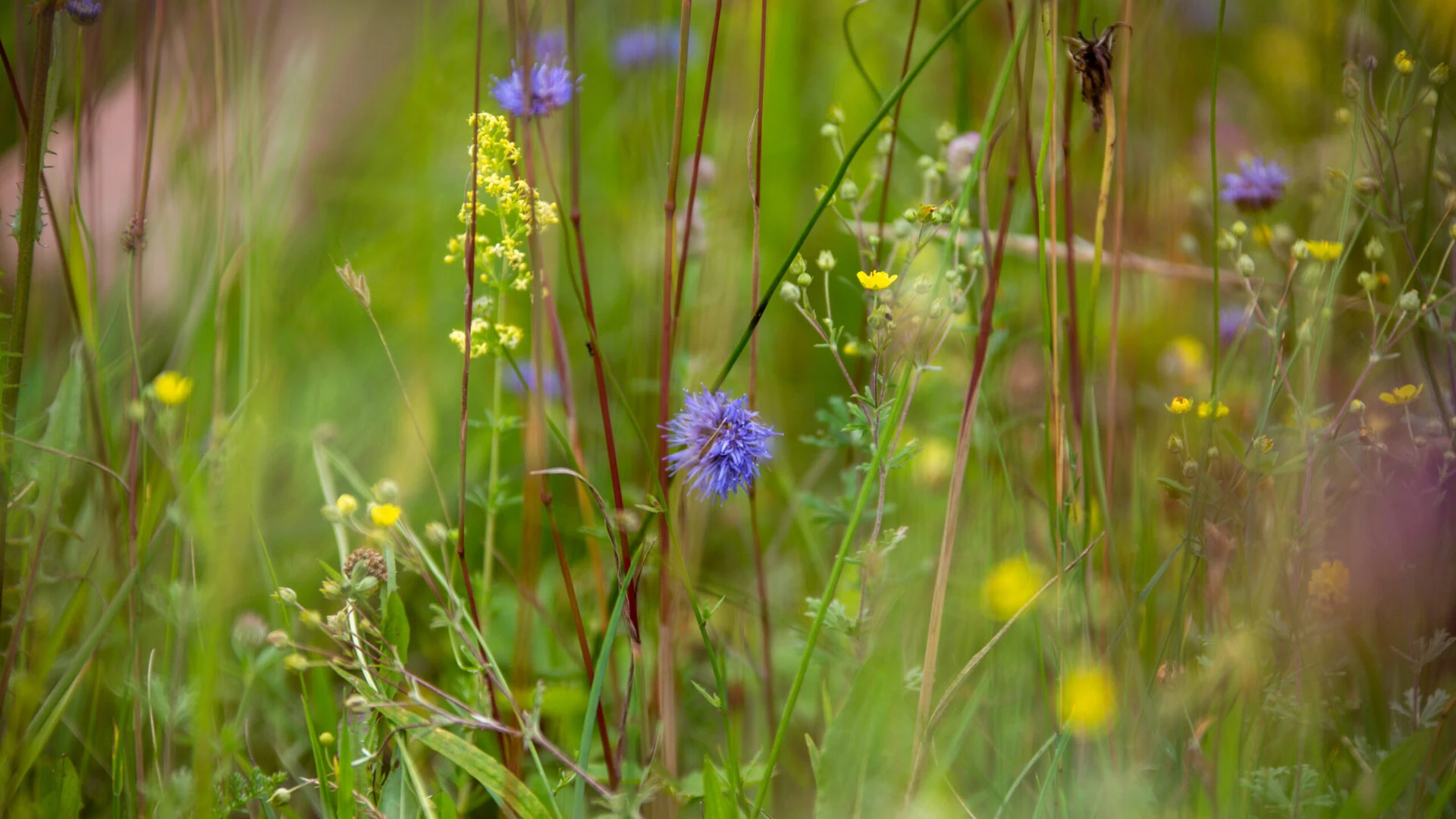
The habitat nominated by the Latvian Fund for Nature as the habitat of the year 2025 reveals a vibrant world of life when seen up close. This year, we turn our attention to and celebrate the edge – the transition zone between two or more ecosystems. Edges are characterised by exceptionally high biodiversity, as they host species from neighbouring ecosystems as well as species that depend specifically on edge conditions.
One of the most visible and familiar types of edge habitat is the roadside. Road verges can support a remarkable diversity of plants, which in turn attract pollinators. Animals, insects and small mammals also use roadsides and their vegetation as feeding grounds, shelter and movement corridors.
In certain landscapes – such as intensively farmed agricultural areas, industrial zones or highly urbanised environments – roadsides, forest edges and watersides may represent the only refuges for wild species. In urban areas, they become part of the green infrastructure, supporting biodiversity, attracting pollinators and providing other ecosystem services.
At the same time, roadsides can also pose risks. Unfortunately, they may become ecological traps, as animals seeking refuge there face a higher risk of mortality, for example when crossing roads. Another issue associated with roadsides is the spread of invasive species.
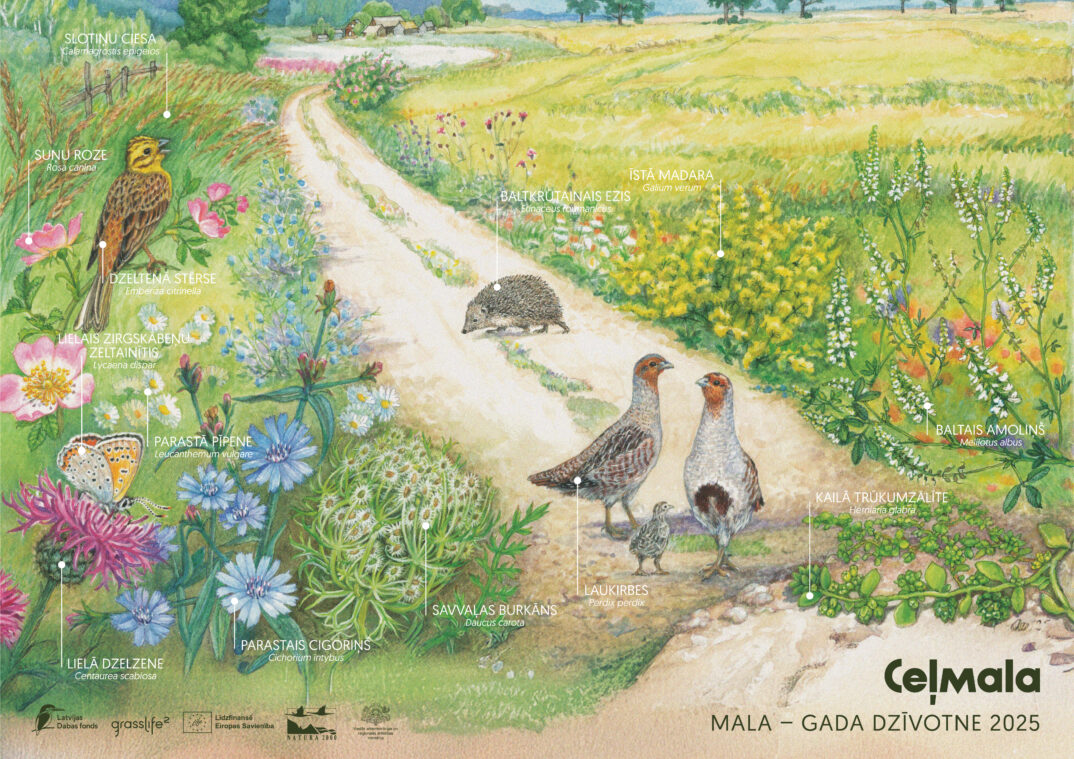
Artist Marija Vīksniņa’s illustration presents a cross-section of a roadside, highlighting characteristic life forms – from chicory flowers to large copper butterflies. We invite you to explore and linger in this colourful and lively habitat! The illustration was created with financial support from the Latvian Fund for Nature’s GrassLIFE2 project.
We extend our thanks to artist Marija Vīksniņa and designer Agnese Bebre.